How Long Can You Have Pulmonary Embolism Without Knowing
Overview
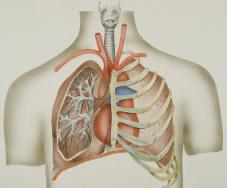
What is a pulmonary embolism?
A pulmonary embolism is a blood clot in the lung that occurs when a clot in another part of the body (often the leg or arm) moves through the bloodstream and becomes lodged in the blood vessels of the lung. This restricts claret flow to the lungs, lowers oxygen levels in the lungs and increases blood force per unit area in the pulmonary arteries.
If a jell develops in a vein and it stays there, it'south called a thrombus. If the clot detaches from the wall of the vein and travels to some other part of your body, it'south called an embolus.
If PEs are not treated quickly, they can crusade heart or lung damage and fifty-fifty death.
Who is at risk of developing a claret clot?
People at risk for developing a claret jell are those who:
- Take been inactive or immobile for long periods of fourth dimension due to bed rest or surgery.
- Have a personal or family unit history of a claret clotting disorder, such as deep vein thrombosis (DVT) or pulmonary embolism (PE).
- Have a history of cancer or are receiving chemotherapy.
- Sit for prolonged periods.
People at take a chance for developing a pulmonary embolism include those who:
- Are inactive for long periods of time while traveling via motor vehicle, train or plane.
- Have a history of centre failure or stroke.
- Are overweight or obese.
- Have recently had trauma or injury to a vein, perhaps after a recent surgery, fracture or due to varicose veins.
- Are pregnant or take given nascence in the previous 6 weeks.
- Are taking nativity command pills (oral contraceptives) or hormone replacement therapy.
- Placement of central venous catheters through the arm or leg If you have whatever of these risk factors and you accept had a blood clot, please talk with your health care provider so steps can be taken to reduce your personal hazard.
How serious is a pulmonary embolism?
A pulmonary embolism may dissolve on its ain; it is seldom fatal when diagnosed and treated properly. However, if left untreated, information technology can be serious, leading to other medical complications, including death. A pulmonary embolism tin:
- Cause middle damage.
- Be life-threatening, depending on the size of the clot.
Symptoms and Causes
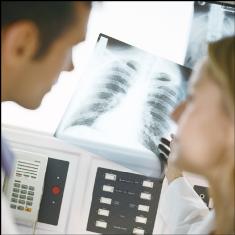
What are the symptoms of pulmonary embolism?
Symptoms of pulmonary embolism vary, depending on the severity of the jell. Although well-nigh people with a pulmonary embolism experience symptoms, some volition not. The beginning signs are commonly shortness of breath and chest pains that get worse if you exert yourself. Yous may cough up bloody sputum. If you lot have these symptoms get medical attention right away. Pulmonary embolism is serious but very treatable. Quick treatment greatly reduces the chance of decease.
Symptoms may include:
- Sudden shortness of jiff -- whether you've been active or at rest.
- Unexplained abrupt pain in your breast, arm, shoulder, cervix or jaw. The pain may also be similar to symptoms of a heart assail.
- Coughing with or without bloody sputum (mucus).
- Pale, clammy or blueish-colored pare.
- Rapid heartbeat (pulse).
- Excessive sweating.
- In some cases, feeling anxious, light-headed, faint or passing out.
- Wheezing.
It is also possible to have a blood clot and non have whatever symptoms, and then talk over your chance factors with your health intendance provider.
If yous take any symptoms of pulmonary embolism, get medical attention immediately.
What causes pulmonary embolism?
Pulmonary embolism may occur:
- When blood collects (or "pools") in a sure part of the body (unremarkably an arm or leg). Pooling of claret usually occurs later on long periods of inactivity, such as afterwards surgery or bed balance.
- When veins have been injured, such as from a fracture or surgery (specially in the pelvis, hip, knee joint or leg).
- As a outcome of another medical status, such equally cardiovascular illness (including congestive heart failure, atrial fibrillation and eye set on) or stroke.
- When clotting factors in the blood are increased, elevated, or in some cases, lowered. Elevated clotting factors can occur with some types of cancer or in some women taking hormone replacement therapy or birth control pills. Aberrant or depression clotting factors may likewise occur every bit a effect of hereditary weather condition.
Diagnosis and Tests
How is a pulmonary embolism detected?
Pulmonary embolism is commonly detected through the following tests:
- Computed tomography (CT) scan.
- Lung scan.
- Blood tests (including the D-dimer test).
- Pulmonary angiogram.
- Ultrasound of the leg -- helps to identify blood clots in patients who cannot have an X-ray due to dye allergies or who are besides ill to exit their hospital room.
- Magnetic resonance imaging (MRI) of the legs or lungs.
Management and Treatment
How is pulmonary embolism treated?
Treatment for pulmonary embolism is typically provided in a hospital, where your condition tin can be closely monitored.
The length of your treatment and infirmary stay volition vary, depending on the severity of the clot.
Depending on your medical condition, treatment options may include anticoagulant (claret-thinner) medications, thrombolytic therapy, compression stockings, and sometimes surgery or interventional procedures to better blood menstruation and reduce the risk of future claret clots.
Anticoagulant medications
In most cases, treatment consists of anti- coagulant medications (also called claret thinners). Anticoagulants decrease the blood's ability to clot and prevent future blood clots.
Anticoagulant medications include warfarin (Coumadin®), heparin, low-molecular weight heparin (such equally Lovenox® or Dalteparin®) and fondaparinux (Arixtra®).
- Warfarin comes in tablet form and is taken orally (by mouth).
- Heparin is a liquid medication and is given either through an intravenous (Iv) line that delivers medication directly into the vein, or by subcutaneous (under the skin) injections given in the hospital.
- Depression molecular-weight heparin is injected below or under the skin (subcutaneously). Information technology is given one time or twice a day and tin can be taken at home.
- Fondaparinux (Arixtra) is a new medication that is injected subcutaneously, once a mean solar day.
You and your family unit volition receive more information about how to accept the anticoagulant medication that is prescribed. Equally with any medication, it'due south important that you sympathize how and when to take your anticoagulant and to follow your doctor'south guidelines.
The blazon of medication y'all were prescribed, how long yous demand to take it, and the blazon of follow-up monitoring y'all'll need depends on your diagnosis. Be certain to continue all scheduled follow-upward appointments with your md and the laboratory so your response to the medication can be monitored closely.
While taking anticoagulants, your follow-up will include frequent claret tests, such as:
- PT-INR: The Prothrombin time (PT or protime)/ International Normalized Ratio (INR) test: Your INR will aid your health intendance provider determine how fast your blood is clotting and whether your medication dose needs to exist changed. This examination is used to monitor your condition if you lot are taking Coumadin.
- Activated fractional thromboplastin (aPTT): Measures the fourth dimension it takes claret to clot. This test is used to monitor your condition if you lot are taking heparin.
- Anti-Xa or Heparin assay: Measures the level of low molecular-weight heparin in the claret. It is usually non necessary to utilize this exam unless you are overweight, have kidney disease or are pregnant.
What are other treatment options?
Compression stockings
Pinch stockings (support hose) assistance blood menses in the legs and should be used every bit prescribed by your doctor. The stockings are usually human knee- high length and shrink your legs to preclude the pooling of blood.
Talk with your physician near how to employ your compression stockings, for how long, and how to care for them. It is important to launder compression stockings according to directions to prevent damaging them.
Procedures
If a pulmonary embolism is life-threatening, or if other treatments aren't constructive, your dr. may recommend:
- Surgery to remove the embolus from the pulmonary artery.
- An interventional procedure in which a filter is placed inside the body's largest vein (vena cava filter) so clots can be trapped before they enter the lungs.
Thrombolytic therapy
Thrombolytic medications ("jell busters"), including tissue plasminogen activator (TPA), are used to deliquesce the clot. Thrombolytics are always given in a hospital where the patient tin be closely monitored. These medications are used in special situations, such as if the patient'south blood pressure is low or if the patient'due south condition is unstable due to the pulmonary embolism.
Prevention
How do I foreclose pulmonary embolism?
- Practice regularly. If yous can't walk around due to bed balance, recovery from surgery or extended travel, move your arms, legs and anxiety for a few minutes each 60 minutes. If yous know you volition need to sit down or correspond long periods, clothing pinch stockings to encourage blood flow.
- Drink enough of fluids, like water and juice, but avoid backlog booze and caffeine.
- If you need to be stationary for long periods of time, move around for a few minutes each hr: move your feet and legs, bend your knees, and stand up on tip-toe.
- Do non smoke.
- Avoid crossing your legs.
- Do non wear tight-fitting habiliment.
- Lose weight if you lot are overweight.
- Elevate your feet for 30 minutes twice a solar day.
- Talk to your doc most reducing your run a risk factors, especially if yous or any of your family unit members take experienced a claret clot.
Living With
What is follow-up care after a pulmonary embolism?
Be sure you discuss and sympathise your follow- up care with your doctor. Follow your dr.'due south recommendations to reduce the risk of some other pulmonary embolism.
Keep all appointments with your doctor and the laboratory so your response to prescribed treatments tin can be monitored.
mitchellpultooper.blogspot.com
Source: https://my.clevelandclinic.org/health/diseases/17400-pulmonary-embolism
0 Response to "How Long Can You Have Pulmonary Embolism Without Knowing"
Postar um comentário